
Sevilla: gateway to the new world
Imagine a city where the gold dust of Peru was counted on marble tables, where Aztec philosophy was debated in Latin, and where a beggar could become rich overnight with a shipment of indigo. This is not a fable. It is 16th-century Seville, the era when the city was not just a point on the map of Spain, but the epicenter of a new world order. For nearly two centuries, Seville held a unique and historic monopoly: to be the Gate to the Americas, the sole legal port of trade between Europe and the immense riches of a newly discovered continent.
This privilege was not merely a bureaucratic formality. It was a social, economic, and cultural cataclysm that transformed a city of narrow streets and quiet courtyards into a modern Babylon, a “New Rome,” a laboratory of unbounded ambition. Here, silver financed European wars and bought Chinese silks; here, art became mystical and anguished with El Greco; here, the picaresque novel was born as a mirror to a society drunk on possibilities and corruption.
This article is a window into that dazzling and contradictory period of Sevilla history. A journey to understand how the Guadalquivir River became the highway of primitive globalization, and how Seville went from being just another city to becoming, literally, the key to an empire on which the sun never set.
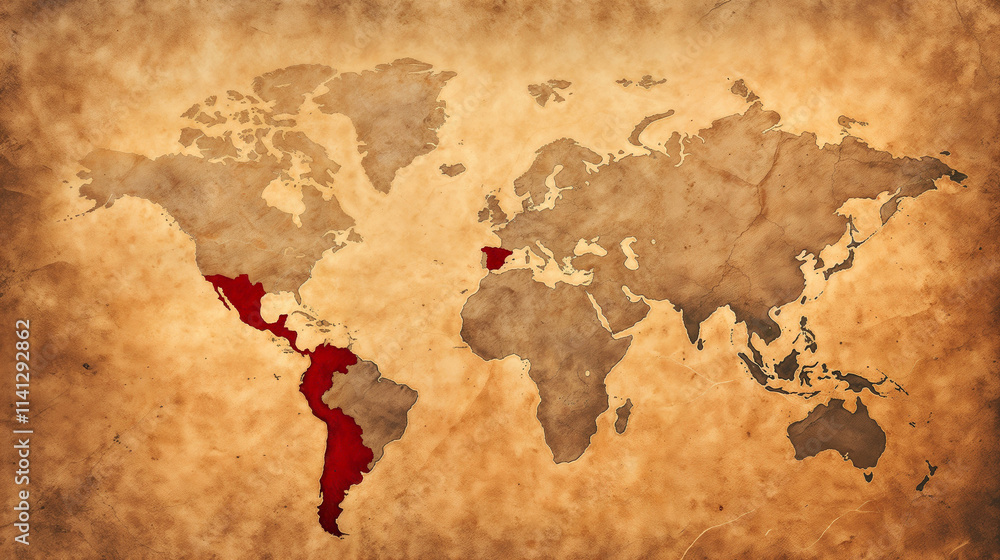
The Reasons: Why the World Passed Through Seville
The choice of Seville as the exclusive port for American trade was no accident. It responded to a geographic, political, and religious logic that the Crown of Castile exploited with unprecedented strategic vision.
1. Controllable Geography: The River as a Natural Fortress
The Guadalquivir River was a navigable artery connecting the agricultural and mining interior of Andalusia with the Atlantic. But its true advantage was security. Seville was about 80 miles (130 km) inland. This meant that ships laden with treasures were not exposed on an open coast to attacks by English, French, or Dutch pirates. The journey up the river was a natural funnel, easy to monitor and defend.
2. The Infrastructure of Power: The House of Trade
In 1503, just eleven years after the Discovery, the Catholic Monarchs founded the House of Trade of the Indies (Casa de la Contratación de Indias). This institution, headquartered in the Royal Alcázar of Seville, was far more powerful than a simple customs office. It was the world’s first ministry of global economics. It controlled absolutely everything: it registered every ship, every passenger (prohibiting Jews, Moriscos, and foreigners from passing), and every gram of merchandise that left or entered. It collected the “Royal Fifth,” the 20% tax that belonged to the Crown. It was the administrative and fiscal brain of the empire.
3. The Weight of Tradition and Faith
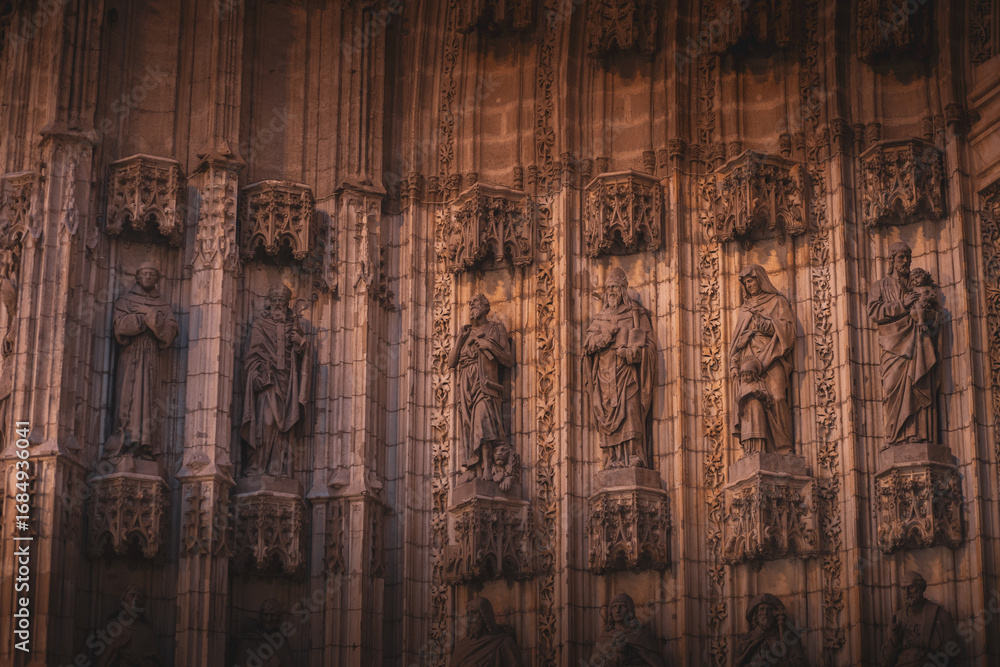
Seville was the great city of the south, heir to maritime and commercial tradition. Furthermore, it was a bastion of orthodox Catholicism after the Reconquest. The Crown trusted its loyalty and the iron control the Church could exert over an enterprise that was also an evangelizing crusade. The Cathedral, under construction, stood as a symbol of this divine and earthly power.
The Evolution of the City: From Medieval Town to Global Metropolis
The impact of the monopoly physically transformed Seville at a dizzying speed.
The Port: The “Mule Quay” and the Gold Fever
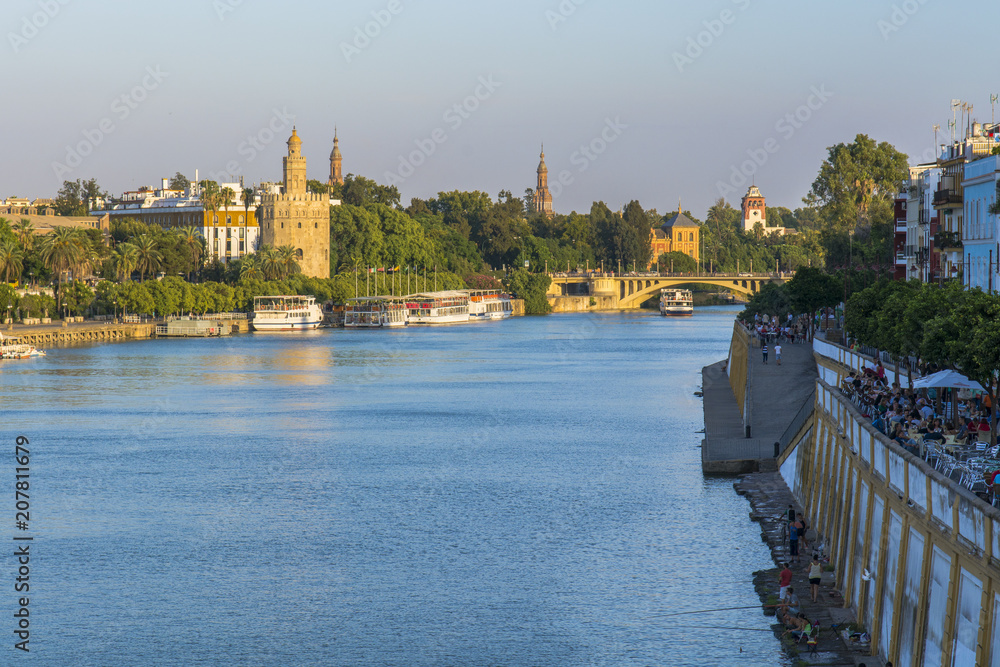
The riverbank, in the area of El Arenal and Triana, became a scene of frenetic spectacle. The old Mule Quay (Muelle de las Mulas, now gone) was a forest of masts. Here, in constant tumult, silver ingots from Potosí, cochineal for dyes from Mexico, hides from the Río de la Plata, tobacco, cocoa, and precious woods were unloaded. The smell of spices, salt, and tar was permanent. Triana, on the other side of the river, buzzed with its shipyards, where the galleons that would cross the ocean were built and repaired.
The Demographic Explosion: The Great Babylon
The population tripled, from about 45,000 inhabitants in 1500 to over 150,000 in 1600. Seville became a “Great Babylon,” a melting pot of races and trades like never before seen in Europe. To the local population were added:
- Merchants and bankers from Genoa, Flanders, and Germany, who financed the expeditions.
- Sailors from all ports of the continent.
- African slaves, brought for domestic service and labor.
- Adventurers, rogues, and prostitutes drawn by the smell of easy wealth.
It was a city of extremes, where the most obscene opulence coexisted with the most abject misery in the same alleyways.
The Cosmopolitan City: The “New Rome”
Seville was called “New Rome” not only for its power but for its universal character. It was the beacon to which the world looked. Dozens of languages were spoken here. Colleges were founded to teach indigenous languages to missionaries. The city was a hive of news: the latest explorations of the Amazon, rebellions in the Andes, silver prices in Antwerp… everything was known first in the courtyards of the House of Trade and in the gossip spots (mentideros) of the streets.
The Flowering of Arts, Sciences, and Literature
The wealth flowing through Seville was not just hoarded; it was invested in patronage, creating an environment of extraordinary cultural ferment.
Art: From Gold to Mysticism
Silver financed an artistic revolution. Churches, convents, and palaces were built and decorated with unprecedented profusion. But the most brilliant artist of the era, El Greco (Doménikos Theotokópoulos), arrived from Crete seeking royal patronage for a great project at El Escorial. Although he did not fully succeed, he found in the exalted, almost mystical spirituality of Counter-Reformation Seville the perfect breeding ground for his art. His work, with its elongated figures and supernatural colors, captures the tension between the earthly materialism of the city and the yearning for transcendence.
The Sciences: Navigation and Cartography
The House of Trade was also a first-rate scientific center. Here worked the Chief Pilots, like Amerigo Vespucci, who trained navigators in the art of cartography and the use of new instruments. The “Padrón Real” was created, the official and secret map of the known world, constantly updated with information from each voyage. Botany and medicine also advanced with the study of new medicinal plants from the Americas.
Literature: The Cradle of Realism and the Picaresque
This is, perhaps, the most enduring legacy. The Seville of the Golden Age was the setting and inspiration for the picaresque novel, the literary genre that reflected the dark side of splendor.
- “Lazarillo de Tormes” (anonymous, 1554) is not set in Seville, but it inaugurated the genre that would flourish in the city.
- “Guzmán de Alfarache” (Mateo Alemán, 1599) is the masterpiece. Its protagonist, Guzmán, is a Sevillian rogue who narrates his life from misery to wealth and fall, offering a brutal and moralizing satire of the society of the time: greedy merchants, impoverished nobles, hypocritical clerics, astute prostitutes.
The picaresque is the literary testimony of the “Great Babylon.” It shows a city where appearances are everything, where a clever scoundrel can thrive, and where fortune is as fickle as the price of silver. It is the necessary counterpart to the official image of imperial grandeur.
The Decline: When the River Refused Passage
Seville’s hegemony could not last forever. Three main factors closed the Gate to the Americas:
- The Widening of the World: The monopoly became ungovernable. Trade with the Philippines (the Manila Galleon) and the colonization of other territories made it impossible for everything to pass through a single point.
- The Thirst of the River: The Guadalquivir, battered by deforestation and sediment runoff, began to silt up. The galleons, ever larger, had difficulty sailing up it. Sanlúcar de Barrameda and, above all, Cádiz, with its deep bay, began to steal the spotlight.
- Competition and Corruption: Smuggling was massive. Corruption networks within the House of Trade itself undermined the system’s effectiveness.
In 1717, the monopoly was officially transferred to Cádiz. Seville entered a long slumber, but its urban fabric, its art, and its legend already bore the indelible mark of having been, for two centuries, the navel of the world.
Conclusion: The Traces of the Closed Gate
Today, walking through Seville, one can trace the footprints of that foundational era.
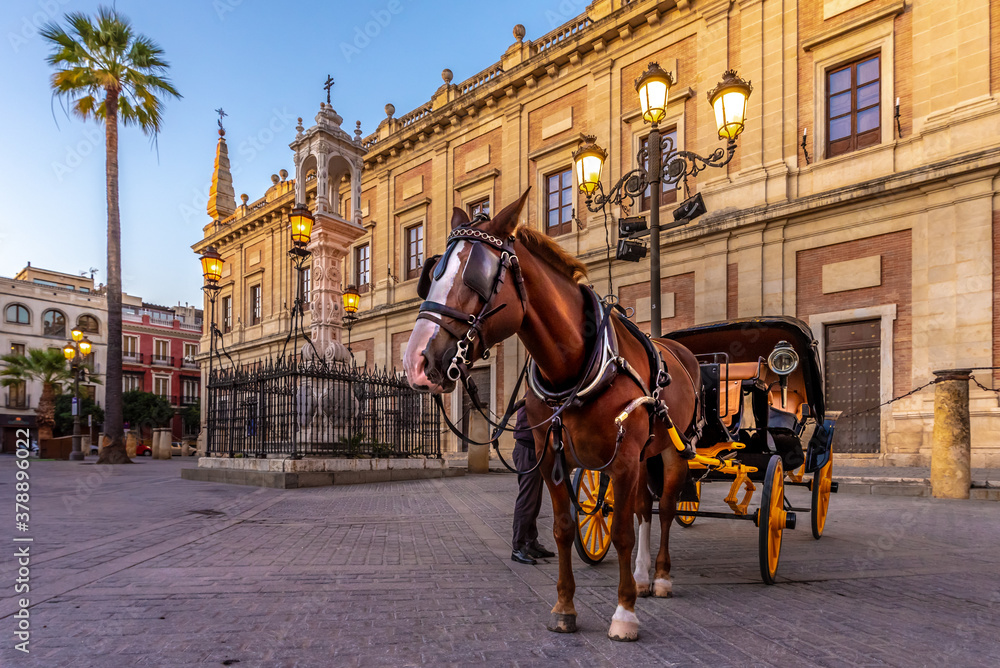
- The General Archive of the Indies (created later, in 1785), housed in the old Merchants’ Exchange, holds the paper of that greatness: 80 million pages that are the written memory of the encounter between two worlds.
- The Torre del Oro, which monitored river traffic.
- The streets of the center, whose palaces were built with indiano (New World) money.
- The Cathedral itself, whose immensity is a reflection of the divine and earthly ambition of a city that believed itself chosen.
Understanding that Seville was the Gate to the Americas is key to understanding why this city has such an intense, theatrical, and contradictory personality. It is the key to deciphering its pride, its tradition of openness, and its profound melancholy. Because from here, not only silver was shipped, but also the dreams, fears, and destiny of an era that changed history forever.