
Table of Contents
Things About Seville That Will Actually Surprise You
Most cities have a short list of facts that get repeated forever. Seville is one of them. You know the cathedral is big. You know it’s hot. You know flamenco. Fine.
But Seville is a city that was once the richest on Earth, the center of the entire known world’s trade, a place where four major civilizations built on top of each other’s bones for 2,700 years. There’s a lot more to it than what fits on a tourist brochure.
This is the deeper version. Facts with context, comparisons that actually mean something, and a few things that make locals laugh when visitors get surprised by them. There is a lot of curiosities of Seville.
Seville Is Older Than Rome
Not metaphorically. Literally older.
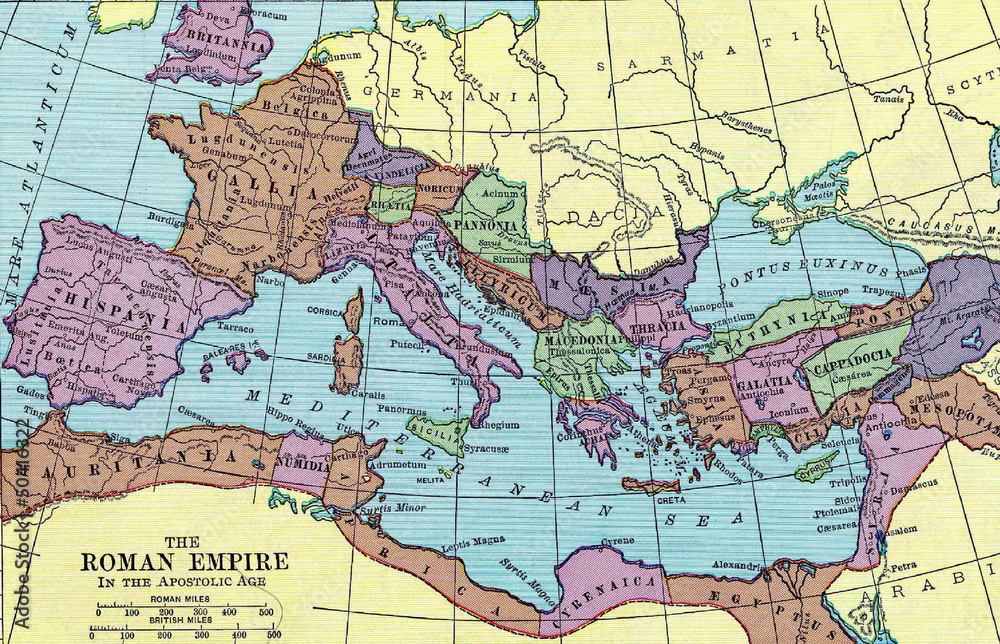
Seville was founded by the Phoenicians around the 8th century BC. Rome wasn’t founded until 753 BC, by the traditional account. The city the Romans would call Hispalis was already a functioning trading settlement before Latin existed as a language.
When the Romans took Hispalis in 206 BC, they recognized immediately what the Phoenicians already knew: the Guadalquivir river made this place special. It was navigable from the Atlantic all the way inland, which in the ancient world meant commercial dominance. Julius Caesar served as quaestor here. Emperor Augustus upgraded it to a Roman colony. Two later emperors (Trajan and Hadrian) were born in the province of Hispania Baetica, the Roman administrative region centered on Seville.
Compare that to Barcelona, which was founded by the Romans themselves around 15 BC as Barcino, six centuries after Seville already existed. Or Madrid, which doesn’t appear in historical records until the 9th century AD as a small Moorish defensive outpost. Seville was already ancient by then.
For 200 Years, It Was the Richest City in the Western World
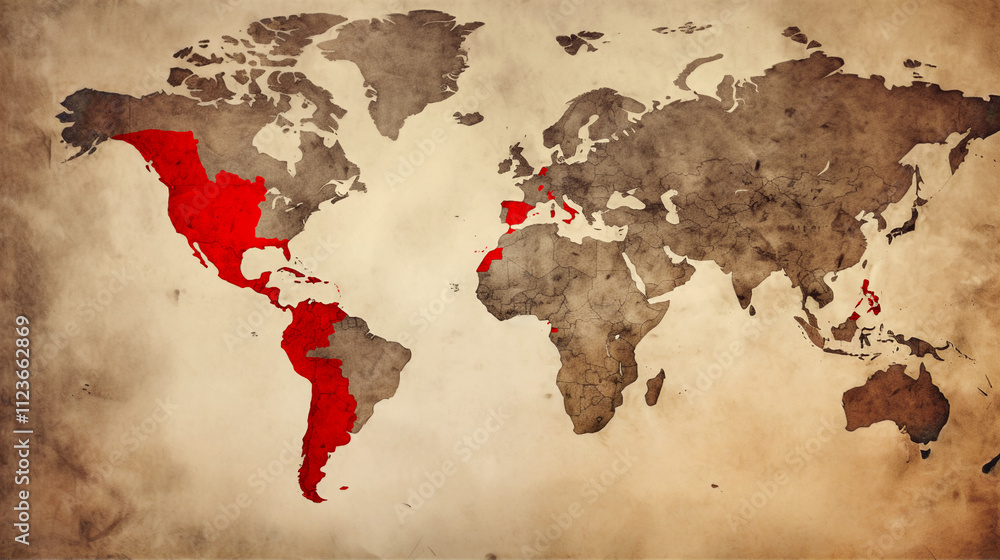
After 1492, Spain needed a monopoly port to control trade with the Americas. Seville got it.
The Casa de Contratación (the House of Trade) was established here in 1503. Every ship going to or from the New World had to pass through Seville. Every ounce of gold, every shipment of silver from Potosí (the Bolivian mine that produced so much silver it distorted European inflation for a century), every cocoa bean and tobacco leaf, all of it cleared customs in Seville.
The city became, for about 150 years, the financial center of the entire Western Hemisphere. The population exploded. Entire neighborhoods were built from scratch. Artists, merchants, and criminals from across Europe flooded in. Cervantes spent time in the Seville jail and almost certainly drew from the city for Don Quixote. Velázquez was born here in 1599.
By comparison, London in 1550 had roughly the same population as Seville. Paris was larger but didn’t control anything comparable. Seville was, in a very real sense, where the modern global economy was invented.
It ended when the port moved to Cádiz in 1717 because the Guadalquivir was silting up and larger ships couldn’t navigate it. Within a generation, the city went from the richest in Europe to a provincial backwater. That fall is part of why the historic center looks the way it does, most of it was built during that 200-year golden age and then never significantly demolished or replaced.
The Cathedral Was Built as a Statement of Absurd Ambition
In 1401, the chapter of Seville decided to build a cathedral. The minutes of that meeting reportedly contain the line: “Let us build a cathedral so large that those who see it will think we are mad.”
They succeeded.
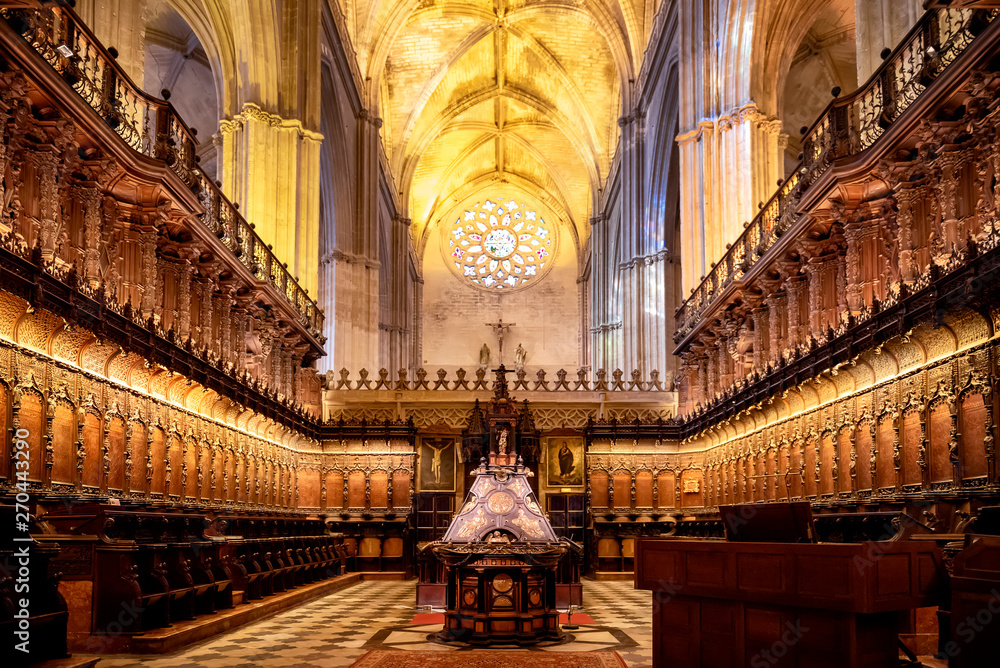
The Seville Cathedral is the largest Gothic cathedral in the world and the third largest Christian church overall, after St. Peter’s Basilica in the Vatican and the Shrine of Our Lady of Aparecida in Brazil. Its interior covers 11,520 square meters. It took 113 years to build (from 1401 to 1519) which means the architects who designed it knew perfectly well they would never see it finished.
Now compare it to Notre Dame in Paris: 5,500 square meters of floor space, built in about 100 years. Notre Dame is magnificent, but it’s roughly half the size of Seville’s cathedral. The Cologne Cathedral, which also took centuries to build and is one of the great Gothic structures in the world, covers about 8,000 square meters, still 30% smaller.
Inside, the main altarpiece is the largest in the world: 27 meters high, 18 meters wide, 44 carved relief panels, covered in gold leaf. It took 82 years to complete and was the work of multiple sculptors across generations. Most visitors stand in front of it for two minutes and move on. It deserves twenty.
The Giralda Was a Minaret First, and One of Three Survivors
When you look at the Giralda, you’re looking at a 12th-century Islamic minaret that was converted into a Christian bell tower. The construction was ordered by the Almohad caliph in 1184 and completed in 1198.
What most people don’t know: it had two sisters.
The three great Almohad minarets were built in the same era, by the same dynasty, as declarations of power across their empire. The Giralda in Seville, the Koutoubia Mosque tower in Marrakech, and the Hassan Tower in Rabat, Morocco. All three follow the same proportional system and share architectural DNA. The Koutoubia is the best-preserved. The Hassan Tower was never finished, the sultan who commissioned it died before completion.
Seville’s version is the only one that was converted and survived inside a completely different religious tradition. The ramp that spirals up the inside (not stairs, a ramp) was built so the muezzin could ride a horse to the top to call prayers. Now it takes tourists to see the city.
The Alcázar Is Still an Active Royal Palace
Every article says the Alcázar is a UNESCO World Heritage Site. Fewer mention that the Spanish royal family still uses it.
When the King and Queen of Spain visit Seville officially, they stay in the upper floors of the Alcázar, which are not open to the public. It’s the oldest royal palace in continuous use in Europe, construction started in 913 AD under Caliph Abd al-Rahman III. Over 1,100 years of continuous occupation by rulers, from the Umayyad caliphate through the Castilian kingdom, the Habsburg empire, and now the constitutional monarchy.
The mudéjar palace ( the part most visitors come to see, built in 1364 by the Castilian king Pedro I) is an architectural paradox that’s never properly explained. A Christian king, who had just reconquered the city from Islamic rule, hired Muslim craftsmen from Granada and Toledo to build him an Islamic palace. He wanted the geometric plasterwork, the arabesque ceilings, the tilework. Not because he was converting to Islam, because it was the finest architecture in the known world and he wanted it.
The result is the best example of mudéjar architecture anywhere, and a building that doesn’t fit the simple narrative of Christian versus Islamic civilization that most history books prefer.
The World’s Largest Wooden Structure Is in Seville, and Almost Wasn’t
In 2003, the city decided to build an underground car park in the Plaza de la Encarnación. Workers started digging. They found Roman ruins. Then more Roman ruins. Then a complete Roman market, one of the best preserved in Spain.
The car park was abandoned. An international architecture competition was held instead. The winner: a massive organic wooden canopy designed by German architect Jürgen Mayer, shaped loosely like giant mushrooms.
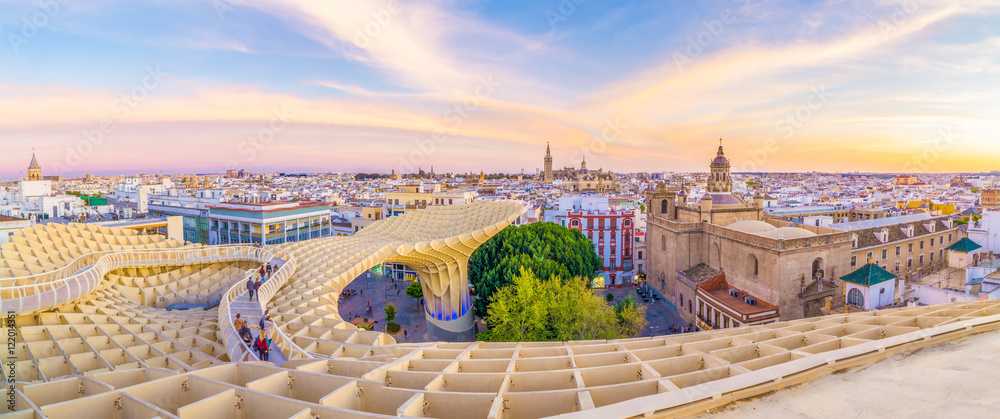
The Metropol Parasol, known by everyone in Seville as Las Setas (the mushrooms) — opened in 2011. It is made of more than 3,400 pieces of laminated wood, covers over 1,500 square meters, and is the largest wooden structure in the world. Its shape was inspired by the vaults of the nearby Cathedral.
Underneath it, in the Antiquarium museum, you can see the Roman ruins that caused the whole thing. Walk up to the walkways on top and you have the best flat panoramic view of the city, better than the Giralda in some ways because you can see Las Setas itself and the medieval roofline at the same time.
The budget originally set for the car park was €17 million. The Metropol Parasol cost €102 million. The city complained at the time. Nobody complains now.
Seville Is Hotter Than Most of Europe Wants to Admit
Seville holds the record for the highest temperature ever recorded in Spain: 50.0°C (122°F) in August 2021, measured in the town of Montoro, 100km northeast, part of the same thermal basin.
The city itself regularly hits 44-46°C in July and August. Average maximum temperatures in summer run around 36°C. That’s not uncomfortable heat for one afternoon, that’s six to eight weeks of sustained extreme heat that has genuine consequences for how the city functions.
Compare that to Madrid, which is also hot but sits on a 650-meter plateau: summer highs typically cap at 32-34°C. Barcelona rarely exceeds 30°C in summer because the Mediterranean moderates the temperature. Seville is inland, low-lying, and surrounded by terrain that traps and amplifies heat in a way that makes it climatically closer to North Africa than to northern Spain.
The city adapted to this centuries ago. The narrow streets of the historic center are a thermal design, they maximize shade. The patios and courtyards of Sevillian houses are built for airflow, not aesthetics. The afternoon siesta isn’t a cultural quirk; it was a physiological necessity for a city where outdoor work in July afternoon was genuinely dangerous.
Summer tourism is dropping in Seville as climate awareness grows. The smart months are March-May and October-November, when the city is at 20–25°C and the light is extraordinary.
The Holy Week Here Is Categorically Different From Anywhere Else
Semana Santa happens everywhere in Spain. But comparing Semana Santa in Sevilla to Semana Santa in, say, Salamanca or Valladolid is like comparing a village carnival to the Rio Carnival. The scale, the organization, and the emotional intensity are completely different.
More than 60 hermandades (brotherhoods) take part, each one moving their float (some weighing 5,000 kilograms) through the streets over the course of the week. The float-bearers called costaleros carry the weight on their necks and shoulders, walking in complete darkness underneath the float, guided only by the voice of the capataz. Some routes take six hours, and back. The bearers rehearse for months.
The processions move through streets so narrow that certain corners require the float to be tilted, precisely, while bearing full weight. These maneuvers are rehearsed over years. Getting them wrong in public is a source of lasting shame.
Valladolid has technically been processing longer, its Semana Santa traditions predate Seville’s formal organization by decades. But Seville’s is the largest, the most elaborate, and the one recognized by UNESCO as Intangible Cultural Heritage.
Seville Versus the Rest of Spain, by the Numbers
This is where the comparisons get concrete:
Population density: Seville has around 4,988 people per square kilometer. Madrid has 5,390. For cities of their size difference (Madrid has 3.3 million people, Seville 700,000) this means Seville feels surprisingly less compressed than you’d expect. The historic center can feel crowded in high season, but the residential neighborhoods breathe differently from Madrid.
Cost of living: A coffee in Seville costs on average 1.40-1.60€. In Barcelona, 2.20-2.50€. In Madrid, somewhere in between. A three-course lunch menu del día in a working Sevillian bar is 12-14€. The equivalent in central Barcelona is €16-20. Food and accommodation are systematically cheaper in Seville than in both Spain’s other major tourist cities, one reason it punches above its weight as a destination.
Tourism growth: Seville saw a 40% increase in tour reservations in 2025, faster growth than Barcelona (which is actively capping tourist numbers) and broadly comparable to Granada’s surge following the pandemic years. The Alcázar receives roughly 1.5 million visitors per year.
UNESCO sites in a single city: Seville has three World Heritage Sites within walking distance of each other, the Alcázar, the Cathedral, and the Archivo de Indias. Granada has one (the Alhambra complex). Madrid has zero. Toledo has the entire old city as a single site. In terms of concentrated UNESCO density per square kilometer of historic center, Seville is without parallel in Spain.
Columbus Is Buried Here
The tomb of Christopher Columbus is in the Seville Cathedral, carried on the shoulders of four metallic kings representing Castile, León, Navarra, and Aragón.
Except there’s a problem. Columbus died in Valladolid in 1506 and was initially buried there. His remains were then moved to a monastery in Seville, then to Santo Domingo in what is now the Dominican Republic, then to Havana when Spain lost Hispaniola, then back to Seville in 1898 when Spain lost Cuba.
The Dominican Republic maintains that the remains in Seville are not actually Columbus, that they took the real remains when Spain claimed them, and what came back was someone else. DNA testing done in 2006 found a partial match with Columbus’s son Hernando, supporting the Seville case. The Dominican Republic has not allowed testing of their remains for comparison.
The City That Invented Opera’s Most Famous Characters
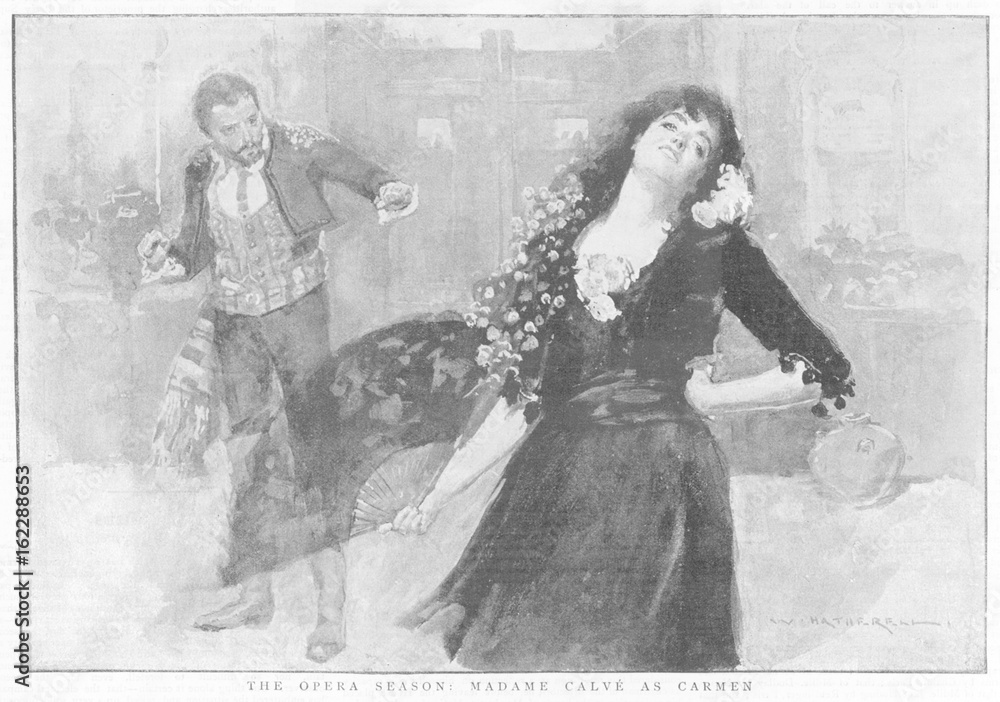
Three of the most performed operas in history are set in Seville. Rossini’s The Barber of Seville (1816). Mozart’s Don Giovanni (1787), whose protagonist Don Juan is a Sevillian nobleman. Bizet’s Carmen (1875), set in Seville’s tobacco factory, a real building, now part of the University of Seville, which at its peak employed 10,000 women and was the largest industrial building in 18th-century Spain.
None of these operas were written by Spanish composers. The city captured the European imagination from the outside, its reputation for passion, danger, social complexity, and beauty was strong enough that foreign composers set their defining works there without having visited, in some cases.
The Real Fábrica de Tabacos that inspired Carmen is now the main building of the Universidad de Sevilla. Students have class in the building where the most famous fictional cigarette factory worker in history supposedly stabbed a man.
Seville vs Barcelona: What Travelers Actually Notice
Barcelona has more international infrastructure, better airport connections, more languages spoken in hotels, a metro system that actually covers the whole city. For a first-time visitor to Spain who wants maximum convenience, Barcelona has the edge on logistics.
Seville is more concentrated. The entire historic center (Cathedral, Alcázar, Santa Cruz, the riverfront, Plaza de España) is walkable in under 20 minutes. You don’t need a metro because you don’t need to go far. What this creates is a different relationship with the city: you start knowing your streets, your bar, your morning routine, within 48 hours.
Barcelona’s major monuments (the Sagrada Família, Park Güell) are from the early 20th century and tied to one architect’s vision. Seville’s are from multiple civilizations over 12 centuries. The experience of standing inside the Alcázar is qualitatively different from standing inside the Sagrada Família, one is a singular artistic vision, the other is a layer cake of human history.
Price: a standard double hotel room in central Seville runs 20-30% cheaper than an equivalent in central Barcelona. Food is cheaper. Entry tickets to monuments are cheaper (or even free, like the Fine arts museum). For comparable quality of experience, Seville undercuts Barcelona consistently.
The Orange Trees Are Useless (On Purpose)
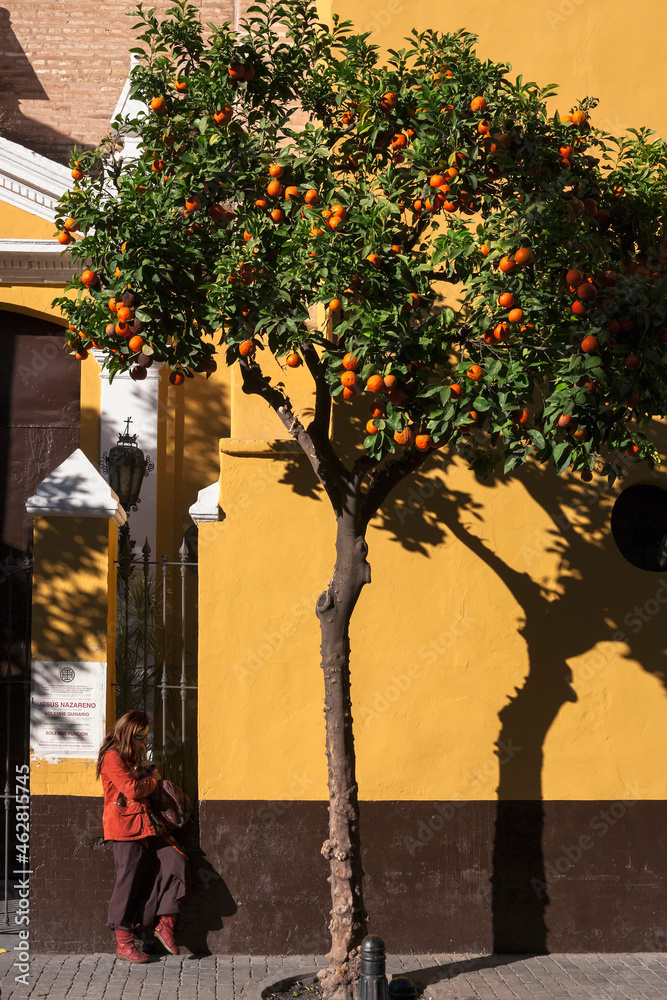
Seville has roughly 47,000 orange trees lining its streets. They produce oranges every winter, the streets smell incredible in spring from the blossom, and the fruit is completely inedible.
These are bitter Seville oranges (naranja amarga) planted specifically because they don’t tempt anyone to stop and eat them off the tree, which would have been a social problem in poorer centuries. The fruit is harvested by the city and exported almost entirely to the UK, where it’s used for marmalade. Around 5.5 million kilograms are harvested annually and shipped north.
The British marmalade industry runs largely on Seville oranges. The city gets the trees and the scent. Britain gets the breakfast preserve. This arrangement has been going on since the 18th century and neither side seems to have a problem with it.
The Building That Took 16 Years to Build Now Feels Like It’s Always Been There
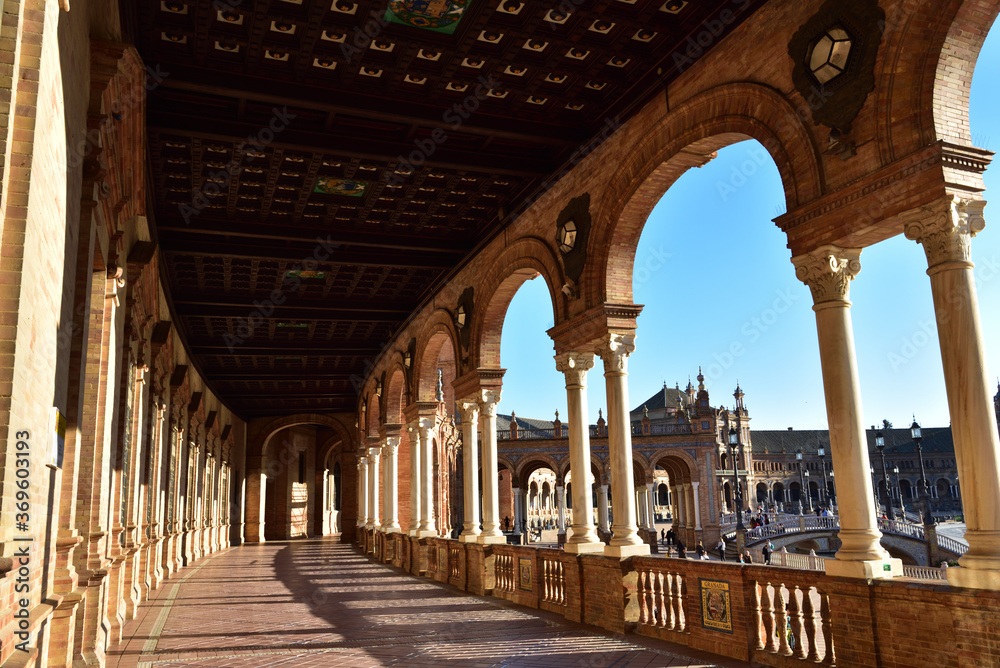
Plaza de España was constructed for the 1929 Ibero-American Exposition. It was designed by architect Aníbal González as a semicircle 170 meters in diameter, with a canal, a bridge for each of Spain’s then-49 provinces, and 52 ceramic-tiled alcoves representing every Spanish province with maps and historical scenes.
It was built as national propaganda, a demonstration of Spanish imperial history to Latin American nations at a time when Spain was trying to reassert cultural influence over its former colonies.
It has since been used as the backdrop for Lawrence of Arabia (1962), Star Wars: Attack of the Clones (2002, as the planet Naboo). It is not ancient. It feels ancient because it was designed to.
Why Seville Stays in People’s Minds
Rome has more history. Paris has more prestige. Barcelona has more contemporary energy. Madrid has more infrastructure.
Seville has something that’s harder to name. The city is small enough to know but large enough to surprise. The historic center is genuinely medieval in layout, not a reconstruction, not a theme park, but a place where people live their daily lives in buildings that have stood for centuries. The pace is slower than Madrid, the social culture is more outdoor-facing, and the food is cheaper and more specific to place.
The comparison that keeps coming up from travelers: Barcelona is the city you visit. Seville is the city you return to.
That might be the most useful curiosity of all.
👉 Ready to see it in person? Check our private tours in Seville.