
The Truth About Paella in Sevilla: A Guide to Avoiding a Culinary Faux Pas
When you think of Spanish food, paella is undoubtedly one of the first dishes that comes to mind. That vibrant, saffron-colored rice dish has become a global symbol of Spanish cuisine. So, it might surprise you to learn that walking into a typical restaurant in Sevilla and ordering a paella for dinner could be the quickest way to reveal you’re a tourist.
In Sevilla, paella is not a traditional everyday dish, and understanding why is key to appreciating the rich and diverse culinary landscape of Spain. This isn’t to say you can’t find a fantastic paella here, but knowing the story behind the pan will transform you from a casual visitor into an informed food lover, ready to explore Spanish cuisine with respect and curiosity. It’s this kind of deep cultural insight that we love to share on our tours, helping you experience the real taste of Andalusia.
More Than a Dish: The Sacred Rules of the Paella
First things first, let’s clear up a common misconception: “paella” is actually the name of the wide, shallow pan with two handles that the dish is cooked in. The food itself is, well, rice. The true home of this iconic dish is the Valencian Community, where they guard its authenticity with a passionate, almost religious fervor.
For Valencians, a true paella Valenciana has a strict set of ingredients: short-grain rice, chicken, rabbit, green beans, garrofó (a type of butter bean), saffron, and olive oil. Stray from this formula, and you’ve entered the contentious territory of arroz con cosas—literally, “rice with things”—a term Spaniards use with a mix of humor and disdain for inauthentic, tourist-targeted versions.
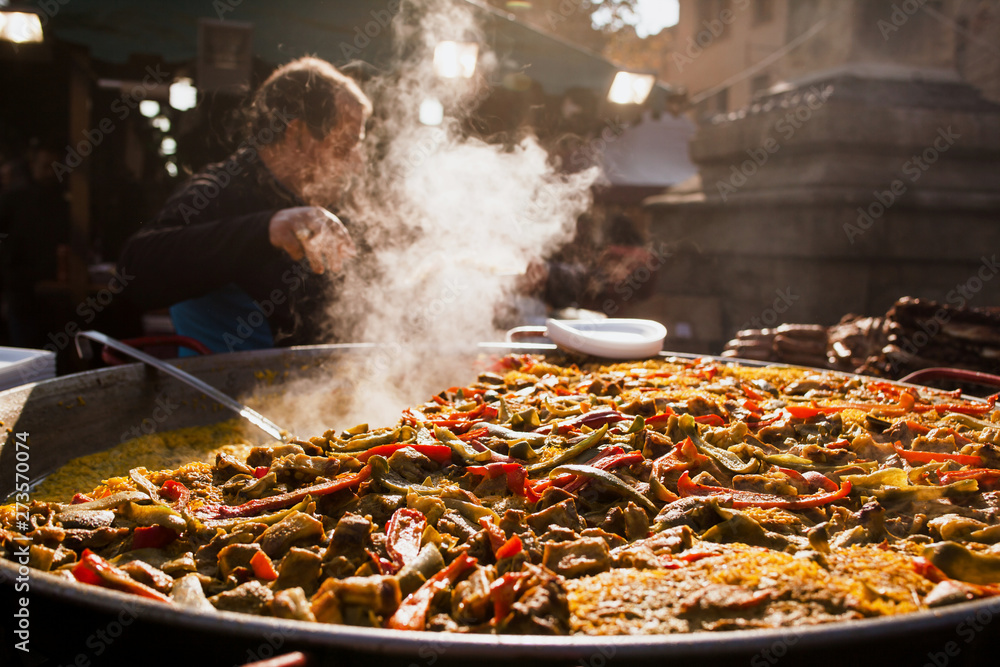
This brings us to the great chorizo scandal. When British chef Jamie Oliver published a recipe for a “paella” that included chorizo, the internet in Spain collectively gasped. It was a culinary crime of the highest order. Why? Because chorizo, while delicious, is never used in authentic paella. Its strong, paprika-heavy flavor and orange oil completely overpower the delicate balance of saffron and the other ingredients, fundamentally changing the dish.
This event perfectly illustrates the deep cultural importance Spaniards place on getting their national dishes right. Furthermore, paella is a lunchtime dish, never a dinner food. It’s a social meal, designed to be shared straight from the pan on a lazy Sunday afternoon, not a quick bite before a night out. In fact, many reputable restaurants in Spain require you to order a paella a day in advance and for a minimum of two people. This ensures it’s made fresh, with care, and in the proper portion.
Finding Good Paella in the Heart of Rice Country
Now for the fascinating paradox: while Sevilla is not the home of paella, it is surrounded by the very source of its main ingredient. The marshes of the Guadalquivir River, particularly in the nearby area of Las Marismas, form the largest rice producing region in all of Spain. The same conditions that make this area a natural wonderland for birds create the perfect environment for growing the short grain rice essential for a great paella. So, you are literally in the heart of rice country, eating a dish that originated elsewhere.
This means that while paella isn’t a traditional Sevillano recipe passed down through generations, the city’s access to incredibly fresh, high-quality rice has led to a demand for excellent versions of the dish. You absolutely can find fantastic paella in Sevilla, but you need to know where to look. The key is to seek out restaurants that specialize in rice dishes or have a strong Valencian influence.
These establishments understand the technique: achieving the perfect socarrat—that coveted layer of crispy, caramelized rice at the bottom of the pan—and balancing the flavors respectfully. They will likely require a pre order, serve it only for lunch, and prepare it for the table. Avoiding places with large, laminated pictures of paella at the door is a good rule of thumb.
Embracing the local cuisine in Sevilla means diving into incredible tapas, flawless jamón ibérico, and refreshing gazpacho. But if you have your heart set on a magnificent paella, it’s possible—you just have to appreciate it as the special occasion dish it is, rather than a nightly staple. On our food tours, we guide you through these nuances, helping you savor both the iconic and the hidden gems of Sevillian gastronomy, ensuring every bite tells a story.