
A walkable guide, organized by area so you don’t waste time getting around, with monuments, neighborhoods, tapas bars and practical tips to make the most of your trip.
Before you start
Best Season?
Seville is a wonderful destination all year round. But the climate is key. Spring and autumn are great, with pleasant temperatures and little rain. Winter is mild in the city and has fewer crowds. In summer, Seville is still Seville, but the heat needs to be taken into account.
From June to September, temperatures hover around or exceed 35-40°C at midday, with peaks of 45°C, so this guide is designed to start early, pause during the central hours and pick back up in the late afternoon and evening. If you’re travelling in spring (March-May) or autumn (October-November), the schedule is more flexible and you can stretch out your midday visits without any problem.
Also keep two special dates in mind: Semana Santa / Holy Week (processions throughout the city, altered capacities and opening hours) and the Feria de Abril / April Fair (the city changes pace completely, and many businesses close or reduce their hours). Beyond that, August is another month worth noting, since many locals are on holiday and some bars may close, though the monuments stay open.
Getting around
Distances in Seville
The historic centre, Santa Cruz, the Plaza de España area and the Setas are all connected on foot within 15-25 minutes. Triana and La Macarena require crossing the river or heading a little further from the centre, but they’re still walkable.
Ways to get around in Seville
- Tussam, the city bus network, with frequent lines running through the centre.
- Sevici, the public bike-share system, widely used by both tourists and locals thanks to how flat the city is.
- Metro and tram (MetroCentro), useful for specific trips, though the historic centre itself has very few stops.
- Taxis and ride-hailing apps (Uber/Cabify), easy to find and reasonably priced for short trips.
What to book in advance
In high season (Holy Week, summer, the Feria), these tickets sell out days in advance, especially:
- Seville Cathedral and the Giralda
- The Real Alcázar
Book them online as soon as your dates are confirmed, and always choose the earliest available time slot: you’ll deal with fewer crowds and avoid the worst of the heat.
Important! If you’re going on your own, only buy tickets on the official websites: alcazarsevilla.org and catedraldesevilla.es. Anywhere else will either be resale (you’ll pay more than you need to) or bundled with a tour.
If you go with an official guide, they’ll take care of the tickets for you!.
Day 1 in Seville: Monumental Seville: Cathedral, Alcázar and Santa Cruz
This is the “big” heritage day of the guide, so it’s worth getting an early start.
Seville Cathedral and the Giralda
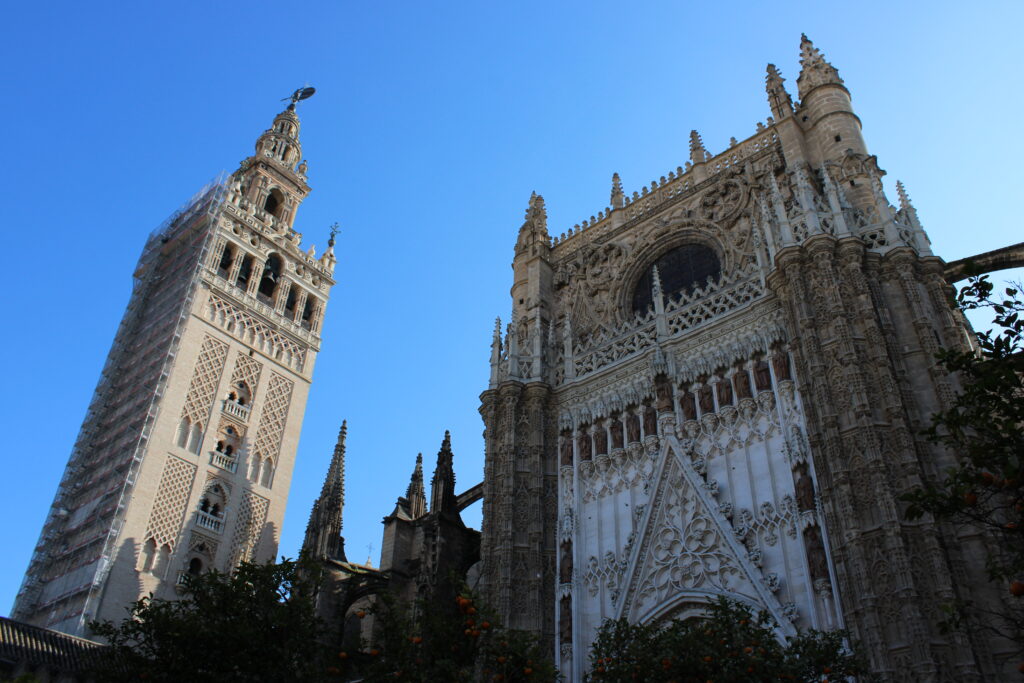
It’s the largest Gothic cathedral in the world, built on the site of the old Almohad mosque; in fact, the Giralda was its minaret, which is why you climb it via gentle ramps rather than stairs (originally so the muezzin could ride up on horseback). Inside you’ll find the tomb of Christopher Columbus and the Main Altarpiece, one of the largest Gothic altarpieces in the world. Allow at least two hours if you want to take it all in, and book your ticket online to avoid queues.
The Real Alcázar
Just steps from the Cathedral, this is a royal palace still in use today, the Spanish royal family still stays here on visits to Seville (blending Mudéjar, Gothic, Renaissance and Baroque architecture in a single complex). Don’t miss the Patio de las Doncellas and the gardens. If you’ve watched Game of Thrones, you’ll recognize several corners: scenes from Dorne were filmed here.

The Santa Cruz Quarter
Coming out of the Alcázar, you step straight into what was once the city’s Jewish quarter: narrow streets, orange-tree patios and quiet little squares just steps from the main avenue. Don’t follow a fixed route here, the joy is in getting lost. It’s also a good spot to stop for lunch.

Plaza de España
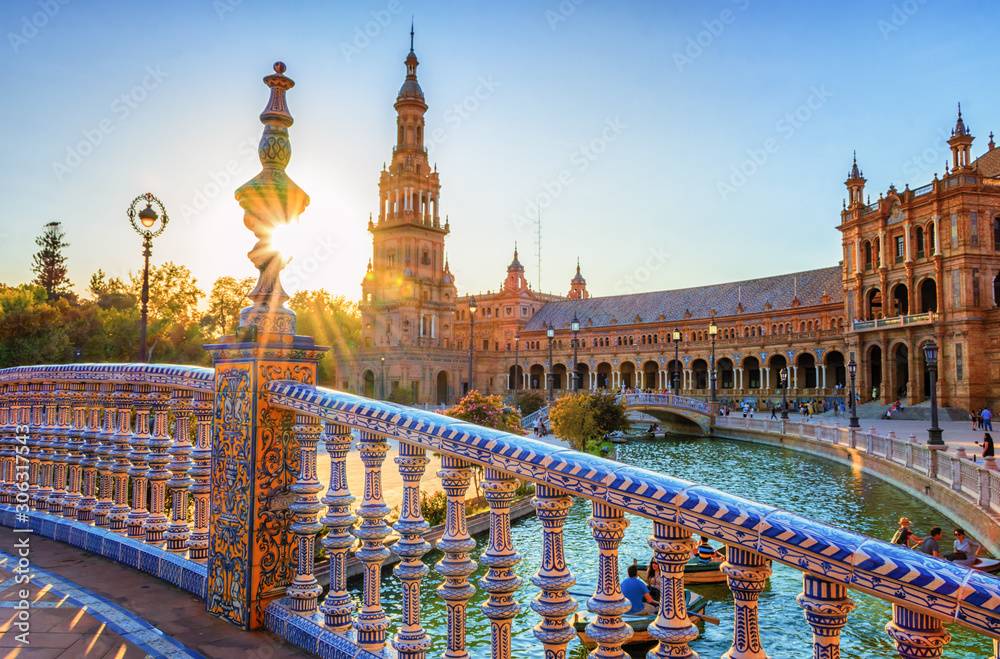
As the heat starts to ease, walk about 15 minutes south. It was built for the 1929 Ibero-American Exposition and is probably the most photographed monument in the city: a semicircle with a navigable canal, four bridges and 48 tiled benches, one for each Spanish province. You can rent a small rowing boat on the canal.
Parque de María Luisa
Right next to the plaza, this is Seville’s great green lung: fountains, gazebos, pergolas and centuries-old trees offering plenty of shade. A good place to slow down, whether on foot, by bike, or in a small horse-drawn carriage.
Torre del Oro
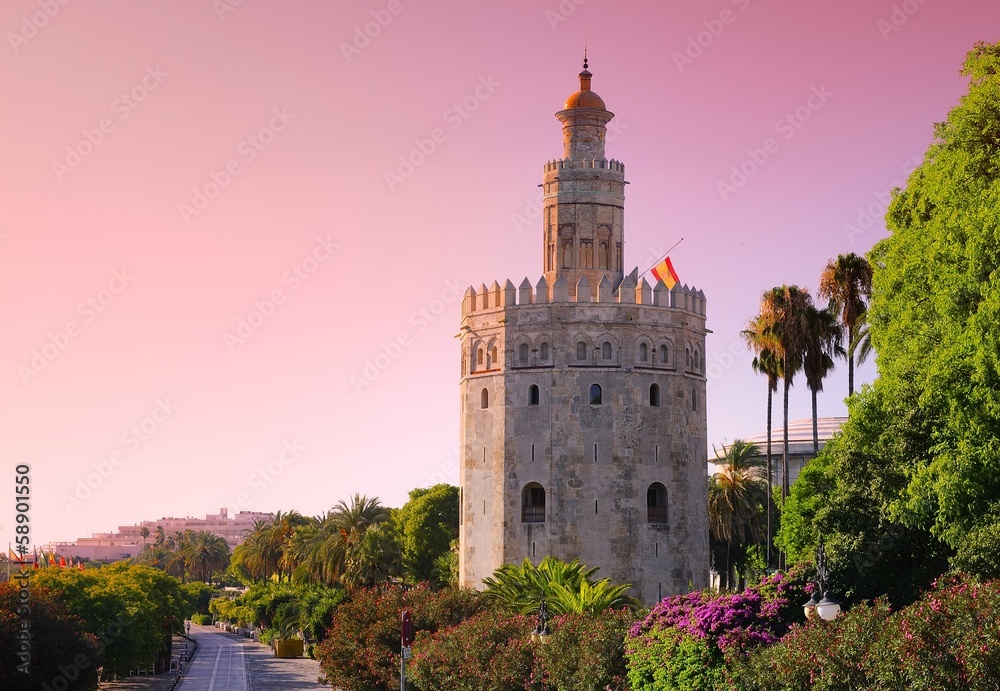
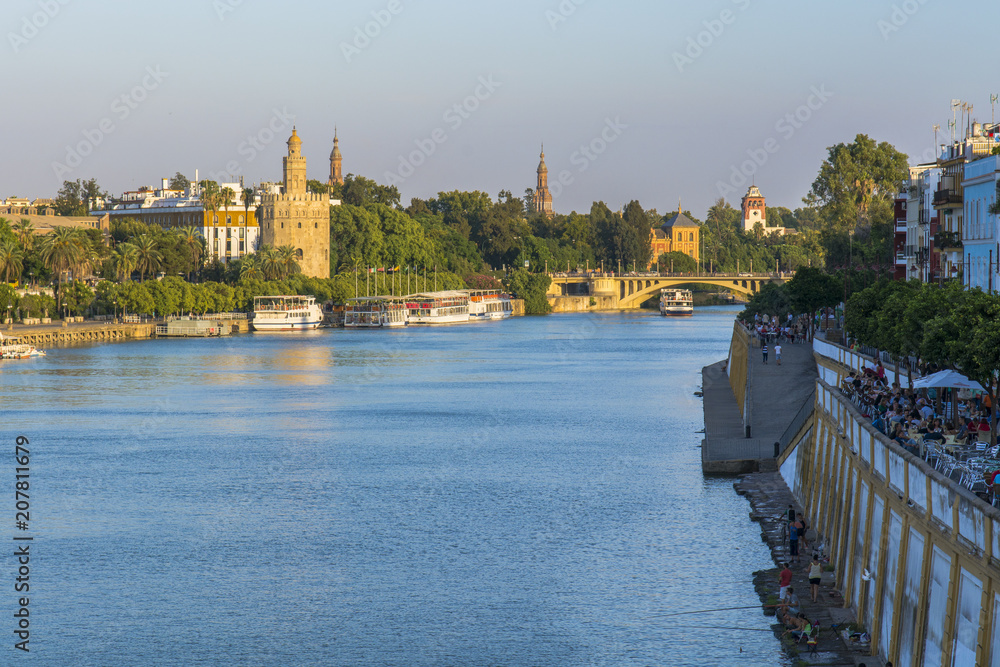
Close the day by walking towards the river. This 13th-century Almohad tower once guarded the city’s river access, and today houses a small naval museum. Admission is almost symbolic, and the views over the Guadalquivir at sunset make for a perfect way to end the day.
Dinner
Tapas in the city centre, see the bar guide further on.
Day 2 in Seville: Modern and local Seville: Setas, Bullring, Alameda and La Macarena
A day that blends contemporary Seville with the neighbourhoods where the local atmosphere really comes through.
Setas de Sevilla (Metropol Parasol)
The largest wooden structure in the world, opened in 2011 above Roman remains you can now visit underground (the Antiquarium). Climb to the upper walkway for one of the best panoramic views of the city. Tip: the ticket usually allows two visits within 48 hours, so you can come back at night to see it lit up.
Plaza de Toros de la Real Maestranza
This bullring, over 250 years old, is still active today. It takes 30-45 minutes to visit, including the museum, the inner corridors and the chance to step onto the arena itself, worthwhile whether or not bullfighting interests you, just for the architecture and history.
Lunch
In the city centre, see the bar guide further on.
Alameda de Hércules
After lunch, walk north through the old town. The Alameda is a long, open plaza that today holds much of Seville’s nightlife and alternative scene: terraces, design-forward bars, occasional markets, and far less tourism than the monumental centre.
Basílica de la Macarena
10-15 minutes from the Alameda, this neo-Baroque basilica houses the Virgen de la Esperanza Macarena, one of the most revered images of Seville’s Holy Week. Free admission. Right next to it stands the Arco de la Macarena, a remnant of the old Almohad city wall.
Dinner
See the bar guide further on.
Day 3: Triana
A slower-paced day, on the other side of the river.
Mercado de Triana
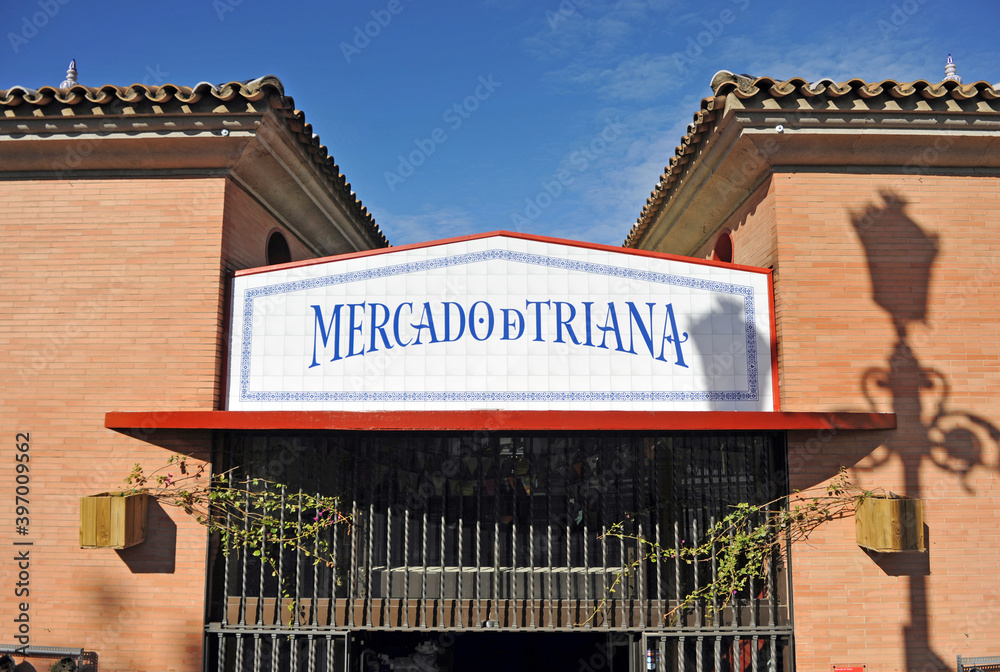
Cross the Puente de Isabel II (known as the Triana Bridge) and head straight into the market, built over the remains of the old Castillo de San Jorge (the former seat of the Inquisition in Seville, now with a small free interpretation centre inside the market itself). Go hungry: it’s one of the best places in the city to snack on seafood, ham and local specialities stall by stall, rather than sitting down at a single restaurant.
Puente de Isabel II (Triana Bridge)
The oldest surviving bridge in Seville, and probably the most photographed. Strolling along Calle Betis by the river, looking back towards the Torre del Oro and the Giralda, and sitting down for a while to enjoy the view, is one of those postcard moments worth not rushing.
Lunch
In Triana, see the bar guide further on.
A walk through Triana
Spend the afternoon unhurriedly exploring the ceramics quarter, on streets like San Jorge or Alfarería, where Seville’s traditional ceramics have been made for centuries. Triana is also the historic birthplace of flamenco and home to several Holy Week brotherhoods, giving the neighbourhood a character quite different from the centre.
Flamenco show in Seville
Southern Spain is the birthplace of flamenco, and Seville has produced some of its greatest artists. We recommend enjoying the singing, dancing and guitar playing somewhere in the city, there are countless places to let yourself be won over by this art form, a UNESCO Intangible Cultural Heritage, performed by artists who will carry that feeling straight to you.
A little bar and tapas guide in Seville
A food tour through Seville
On a food tour through Seville, try the famous chicharrones (crispy pork), the delicious spinach with chickpeas, cod pavías, pringá montaditos, and salmorejo. Also try the local wines: fino, manzanilla and orange wine. Andalusia is home to the Marco de Jerez, Condado de Huelva and Montilla-Moriles wine appellations, making it an excellent destination for wine lovers.
City centre / Santa Cruz
- Bodega Santa Cruz “Las Columnas” (C. Rodrigo Caro) One of the most authentic, locally-loved tapas spots in the centre. Always packed, so eating standing at the bar is part of the experience. Also a good option for breakfast toast.
- Bar Dos de Mayo (Pl. de la Gavidia) Very popular with locals, which is usually a good sign for quality and fair prices. Seafood is one of its strong points.
- La Fresquita (C. Mateos Gago).
- Los Coloniales (Pl. Cristo de Burgos) Good value for money, and open all afternoon, which is rare in Seville. The pork sirloin in port sauce is one of its most popular dishes.
- Ovejas Negras (C. Hernando Colón) Tapas with a more creative, contemporary twist on tradition. No reservations, being a small venue, so go early or be ready to wait.
- La Barra de Inchausti A stone’s throw from the Cathedral, with a great selection of fish and seafood at good prices.
Triana
Always double-check opening hours on Google before you go.
- Bar Las Golondrinas (C. Antillano Campos) A classic, old-school Sevillian bar, good prices and a local crowd. Try the pork sirloin tip, the grilled mushrooms with green alioli, and the marinated vegetables (aliños).
- Bar Santa Ana (C. Pureza) Small and traditional, with Andalusian cooking updated for today; try the chicharrones, the cod pavía and the patatas bravas.
- El Sella (C. Pureza) A bit more of a sit-down restaurant than the bars above; reservations recommended. A good choice for a more relaxed dinner with more time.
- Taberna de Triana (C. Rodrigo de Triana) A cosy spot, good for longer dinners, with old-school specialities like Spanish tortilla in whisky sauce and pork cheek.
- Bodega Vargas An old-school bar specializing in Andalusian wines. Excellent prawns, croquettes and Russian salad, perfect for a tapas-hopping dinner.
Setas-Alameda area
- Taberna Zurbarán One of the best gastrobars in the city. Outstanding Spanish tortilla, sirloin in whisky sauce, and off-menu recommendations worth asking for.
- Bar Dueñas An old-school bar next to the Palacio de las Dueñas; prawns, spinach with chickpeas and dressed potatoes are the specialities.
- Taberna el Acerao Montaditos, tapas and open toasts, with a wide selection of Andalusian wines.
- Baturrones Right at the foot of the Setas; specializes in seafood and fish, with fast service and good-value tapas for all tastes.
- Bodega Mateo Ruiz A special spot dedicated to salt cod, with multiple preparations of the fish alongside a great selection of Iberian pork products and tapas.
General tapas-hopping advice in Seville
In Seville, the norm isn’t to stay at a single bar all night, but to hop between two or three nearby spots. Ordering one or two tapas per bar and moving on lets you try far more variety than sitting down at one place all evening, and it’s also the most authentic way to experience a Sevillian night out.
Rough budget in Seville
- Monument tickets (Cathedral+Giralda, Alcázar, Setas, Bullring): count on 35-45€ per person for all four, not including an audio guide.
- Food: a round of tapas for two (2-3 tapas plus a drink each) usually runs 20-30€ at popular bars; at more sit-down places, it can rise to 40-60€ for two.
- Transport: if you’re on foot most of the time, you’ll barely need to spend anything beyond the odd taxi ride or Sevici trip.
What to bring and practical tips in Seville
- Comfortable shoes: the historic centre is cobblestoned in many areas; prioritize comfort over style.
- Sun protection: a cap, sunglasses and sunscreen, especially from May to September.
- A reusable water bottle: there are public fountains around the centre and the parks.
- A hand fan: it sounds like a cliché, but it’s the most effective and cheapest way to cope with Sevillian heat, and it’s sold in any souvenir shop.
- Something to cover up for the Cathedral: shoulders need to be covered and very short clothing is discouraged; bring something light to throw on if you’re wearing thin straps.
- The Real Alcázar: you must bring ID (passport or driver’s licence) without it you won’t be allowed in. Open every day except January 1st and 6th, Good Friday and December 25th.
- Meal times: locals in Seville eat lunch between 14:00 and 15:30, and dinner from 21:00 onward. Many bars close in the mid-afternoon (16:30-20:00) and reopen at night.
- Sundays: the Cathedral changes its hours for mass, so check the schedule if your Day 1 falls on a Sunday.
- Holy Week and the Feria: expect closed streets, reduced capacity at monuments, and some businesses with special hours or closed altogether.
- Heat: from May to September the midday sun is intense. Book monuments for the first slot of the day and leave the post-lunch/siesta hours free.
- Tickets: buy Cathedral and Alcázar tickets online and in advance, only on the official websites (alcazarsevilla.org and catedraldesevilla.es). Any other channel will be resale or bundled with a tour.
If you have a fourth day in Seville
- Itálica: the best-preserved Roman ruins in Spain, 30-40 minutes away by public bus. Emperor Trajan was born here, and it also served as a filming location for Game of Thrones.
- A trip to Carmona: a walled town about 30 km from Seville, with a well-preserved historic centre and far fewer crowds than other nearby destinations.
Quick summary of our guide for 3 days in Seville
| Day | Area | Highlights |
| 1 | Monumental centre | Cathedral, Giralda, Alcázar, Santa Cruz, Plaza de España, Parque de María Luisa, Torre del Oro |
| 2 | Modern centre and the north | Setas de Sevilla, Bullring, Alameda de Hércules, Basílica de la Macarena |
| 3 | Triana | Mercado de Triana, Puente de Isabel II, Calle Betis, the ceramics quarter |
Hidden gems of Seville
If you have time beyond the three-day main route, or just want to step away from the busiest areas for a while, these spots barely feature in the classic itineraries.
- Plaza del Cabildo. A semicircular square with arches, orange and palm trees, and a stretch of the old city wall, just steps from Avenida de la Constitución yet largely ignored by tourism. On Sunday mornings it hosts a small collectors’ market.
- Casa de Pilatos. A Renaissance and Mudéjar palace in the heart of the city, with spectacular tilework and patios comparable to the Alcázar’s, but with a fraction of the crowds. Still partly inhabited by the noble House of Medinaceli.
- Jardines de Murillo. Right behind the Alcázar’s walls, a quiet extension of the royal gardens, free and open to the public, with palm trees, ponds, and monuments to Columbus and Murillo.
- The San Marcos / San Luis neighbourhood. North of the old town, beyond the Alameda, a residential area with little-visited Mudéjar churches and a real neighbourhood feel. Here you’ll find the magnificent Baroque church of San Luis de los Franceses, an under-visited gem.
- Mercado de la Feria. Seville’s oldest food market, in the La Macarena neighbourhood, far more local and less geared toward tourists than the Triana market. Every Thursday morning it hosts a second-hand market.
- Costurero de la Reina. A small, late-19th-century neo-Mudéjar pavilion tucked away next to Parque de María Luisa and the Hotel Alfonso XIII, easily missed by most people passing through on their way to the Plaza de España.
An honest note for our guide for Seville
- In Seville, you don’t need to book ahead for tapas bars, but you do for higher-end restaurants.
- The vast majority of places already accept card payment, but it’s always useful to carry some cash. Tipping isn’t customary at bars in Spain; instead, it’s common to round up the bill (for example, if it comes to 28€, you’d leave two more to reach 30).
- The food scene is extremely rich in both variety and quality, with literally thousands of bars. It’s not hard to find good places to eat, but stay alert: steer clear of anywhere built around “paella and sangria”, these don’t represent the region’s actual cuisine, are aimed squarely at tourists, and tend to be pricier and lower quality than a genuine Sevillian bar.
- No bar that locals actually go to will have someone standing outside inviting you in, that alone is a sign to avoid a place. A genuine local bar will be full without anyone needing to announce it.
- It’s very common for bars to put bread on the table, which is then charged for. If you didn’t ask for it, you can ask for it to be taken away so you’re not charged; if you eat it or leave it on the table, that’s taken as acceptance. The price of the bread must be listed on the menu, and it’s not legal to charge a cover or service fee. Bars and restaurants are legally required to provide free tap water on request.
- If someone offers you a sprig of rosemary or similar, never take it or let them stop you, they’ll ask for money afterward. It’s a common tourist scam. The best response is a polite “no thanks” as you keep walking
- The same goes for street vendors or musicians who go bar to bar. Sometimes they can be quite insistent.
- Seville is, on the whole, a very safe city. Crime rates are low, violent crime even more so. But pickpockets and opportunistic theft do exist, especially in the most touristy areas: use common sense and avoid quiet, poorly lit areas late at night.
- If you take a horse-drawn carriage ride, note that fares are regulated by the local government. Both the duration and the price are posted on a sign on the carriage, and also published online, don’t accept any other terms. Carriages also aren’t allowed to pick up passengers outside their official stands.
Useful phone numbers in Seville
| Service | Phone |
| Emergencies | 112 |
| Ambulance Seville | 061 / 954 35 91 35 |
| National Police Seville | 091 / 954 28 93 00 |
| Local Police Seville | 092 |
| Fire Brigade Seville | 080 / 081 |